Replica collection · Aqua Terra · Chronometer with date
Omega Seamaster Aqua Terra ref. 2503.80.00, blue dial, 39.2 mm steel
Model reference: 2503.80.00
Price by inquiryconfirmed in the chat, with shipping and lead time
Model size39.2 mm case diameter, as listed by Omega for this reference
DialBlue, brushed finish, with a printed track of small marks around the outer edge
Dial printBrand name over the Seamaster script above the centre; three lines under the hands naming the escapement, the chronometer certification and the depth rating; SWISS MADE along the lower edge
Bezel designPlain polished sloping rim, fixed, with no insert and no scale on it
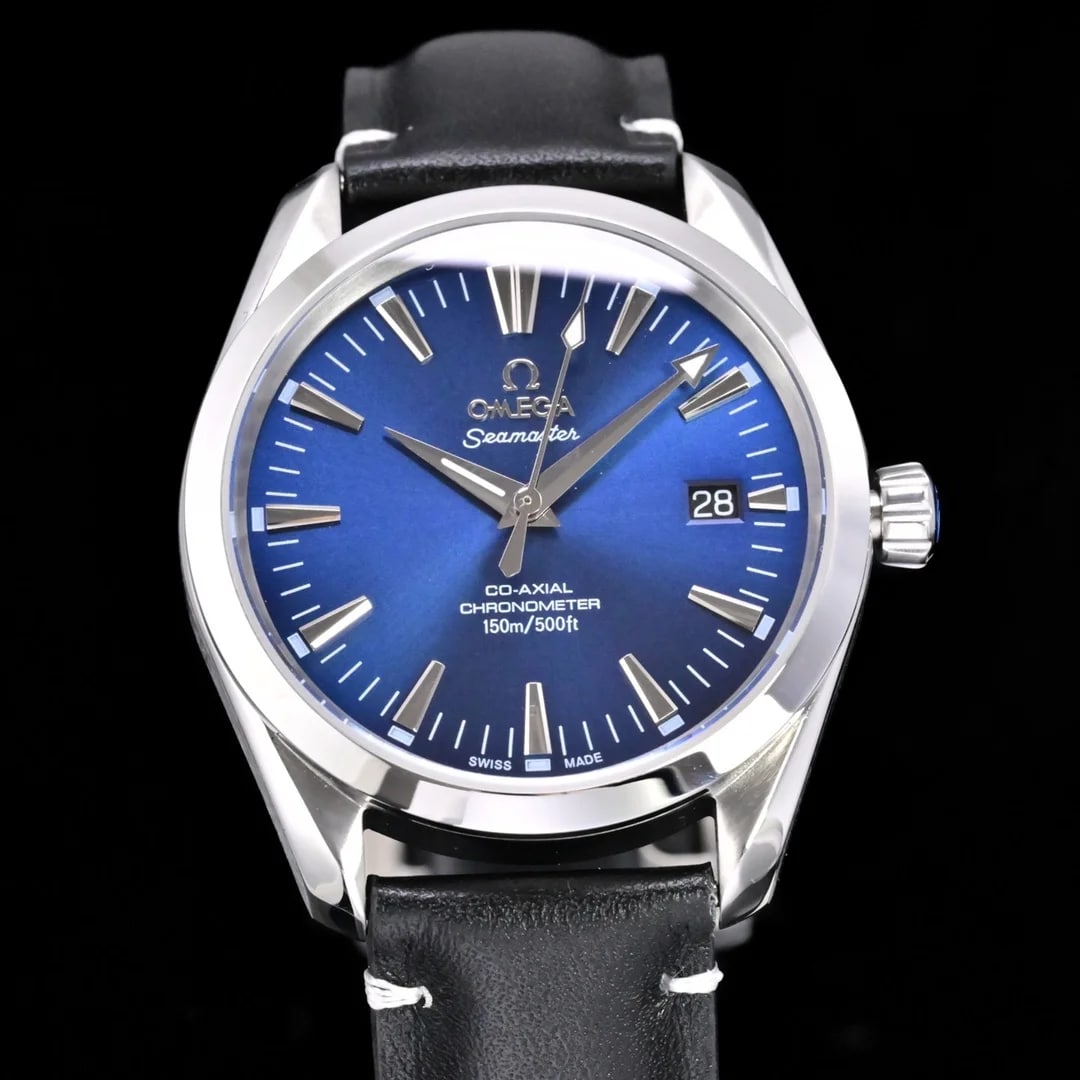
A 39.2 mm blue-dial Seamaster Aqua Terra with a plain polished rim, a date at three, and an earlier-generation dial print naming the escapement and the chronometer certification.
Opens a WhatsApp chat with the model, the reference and this page already written into the message.
Nothing is sent until you press send. Prefer to write it yourself? Use the inquiry box further down.
About this watch
Design and details
The 2503.80.00 is a 39.2 mm Seamaster Aqua Terra with a blue dial, a date at three o'clock and a plain polished rim instead of a rotating bezel. Omega carries it on its own page as the Seamaster Aqua Terra Chronometer and states that the reference is no longer available, which places it in the earlier generation of the line.
The dial print is the detail to start with. It names the escapement and the chronometer certification in three short lines rather than using the later Master Chronometer wording, and it is the marker visible from the front that separates this generation of Aqua Terra from the 41 mm watches that followed it.
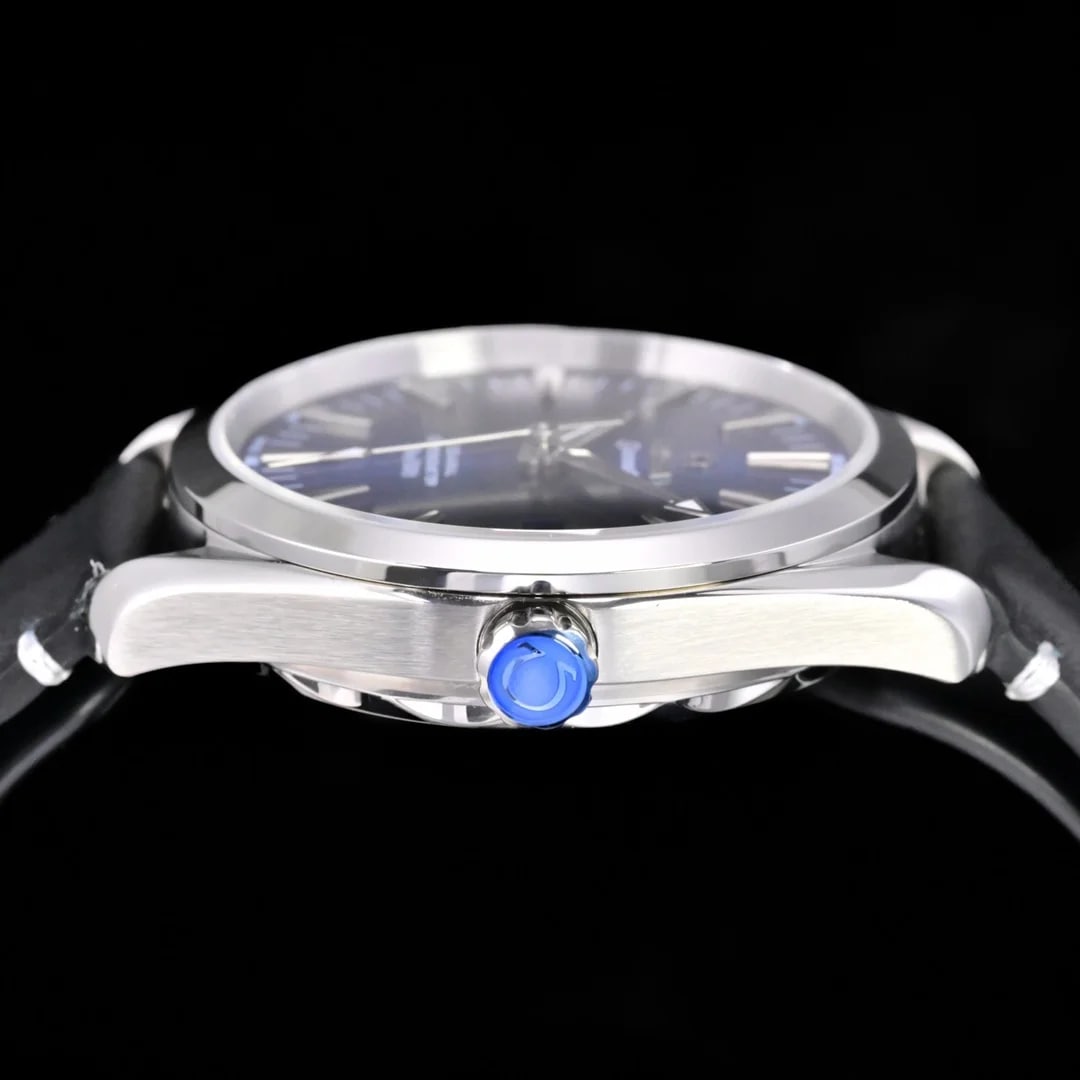
The four frames below are shown as they arrived: the watch on a black textured strap, photographed front on, at an angle, in a dial close-up and at the crown and case flank. Omega's catalogue pairs this reference with a steel bracelet, and that is stated here as published reference data.
How big is the Omega Seamaster Aqua Terra 2503.80.00?
Omega's own page for the 2503.80.00 lists a 39.2 mm case in steel, a domed scratch-resistant sapphire crystal and about 137 g of total weight, and it carries the model as the Seamaster Aqua Terra Chronometer. The same page states that the reference is no longer available.
In the four frames the case reads as a wide, low rim around a dial that takes up most of the front, with the crown standing clear of the flank at three o'clock. It is worth keeping two things apart here: the 39.2 mm figure, the crystal and the 137 g weight are published reference data from Omega's page, and none of them can be measured off a photograph, so the frames are not evidence for size or weight in either direction.
Is the 2503.80.00 a dive watch or a dress watch?
It sits between the two, and every detail that puts it there is visible on the front. The case has a plain sloping rim rather than a rotating bezel, the depth rating is printed on the dial as a line of text instead of a scale, and the hour markers are applied wedges with luminous fill rather than dots sitting on the surface.
That mix is what the Aqua Terra was drawn around: nothing about the front looks like equipment next to a Seamaster diver, yet every marker still carries luminous fill and the dial still states its rating in words where a diver would put a scale. If you want the rotating ring and the bezel numbers, this is the wrong reference; if you want the case shape that goes with a cuff, it is the right one.
Case side detail with the crown standing in the foreground, its rounded blue centre under the light, the brushed case flank beside it, the blue dial seen almost edge-on behind the crystal, and the black textured strap running out of frame on both sides.
Why does the dial say Co-Axial Chronometer instead of Master Chronometer?
Because this reference belongs to the earlier Aqua Terra generation, and the dial print is the visible marker of it. The three short lines under the hands name the escapement and the chronometer certification, without the later Master Chronometer wording.
That distinction matters when a 39.2 mm blue-dial Aqua Terra is standing next to a later 41 mm watch in the same colour. Across a table the two look alike; the print low on the dial is what separates them, and it also tells you which generation of the calibre 2500 family the watch is built around.
Which strap or bracelet does the 2503.80.00 come on?
The four frames show the watch on a black textured strap, while Omega's catalogue pairs the reference with a steel bracelet and a sliding clasp. Both statements are accurate and they are about different things: one is what the frames show, and the other is published reference data.
So the frames are the only evidence on this page for the strap in the frames, and the bracelet is what the reference was catalogued with. Which of the two you would receive is a question for the inquiry form rather than for this page, and it is worth settling before anything else about the watch.
What does the blue dial look like in the four frames?
The dial is a mid blue with a pale brushed finish that lightens toward the centre and deepens at the edge, and it is the same surface in all four frames under different light. Applied wedge-shaped markers stand around the dial, each one filled and catching light along its top edge.
The brand name sits above the centre with the line name in script beneath it, the three printed lines sit low under the hands, and the date aperture at three o'clock shows two digits. A thin printed track of small marks runs around the outside of the markers, and the bezel above it is a plain polished ring with nothing printed on it.
What is the water resistance of the Aqua Terra 2503.80.00?
Omega's page lists 15 bar, or 150 m, for the reference, and the dial in the frames carries the same figure printed as 150m/500ft. Both of those are published statements about the reference design rather than a test result for any one watch.
The state of the seals on a watch that has been worn for some years is not something anyone can read off a photograph, so if the rating matters to you it is better treated as something to confirm than to assume. The caseback, the gaskets and the crown threads all sit outside what the four frames can show.
Specification
Specifications and configuration
Model details and design
Detail
Description
Model reference
2503.80.00
Model size
39.2 mm case diameter, as listed by Omega for this reference
Dial
Blue, brushed finish, with a printed track of small marks around the outer edge
Dial print
Brand name over the Seamaster script above the centre; three lines under the hands naming the escapement, the chronometer certification and the depth rating; SWISS MADE along the lower edge
Bezel design
Plain polished sloping rim, fixed, with no insert and no scale on it
Bezel graduations
None. The depth rating sits on the dial as printed text rather than on a bezel scale.
Hour-marker layout
Applied wedge markers spaced around the whole dial, with small printed marks between neighbouring markers
Hour markers
Applied silver-toned wedges with luminous fill along the tip, as the frames show them
Hand arrangement
Arrow-tipped hour and minute hands with luminous fill, plus a slim seconds hand, as seen in the frames
Date display
Aperture at three o'clock showing two digits; the frames show it reading 28
Subdial layout
None. The dial carries no subdials, only the date window at three.
Colour combination
Blue dial with silver-toned hands and markers, a blue-centred crown in the last frame, and a black textured strap
Strap shown
Black textured strap with light stitching at the lugs, as shown in the four frames
Strap (reference supply)
Omega's catalogue pairs this reference with a steel bracelet and a sliding clasp; published reference data, not what the frames show
Movement (reference design)
Self-winding calibre 2500 with 48 hours of power reserve, as listed by Omega; the unit fitted in an individual watch is a question for the inquiry form
Case and crystal (reference design)
Steel case, domed scratch-resistant sapphire crystal, 15 bar (150 m), about 137 g of total weight on Omega's page
Catalogue status (published reference data)
Omega carries the model as the Seamaster Aqua Terra Chronometer and states that the reference is no longer available
Questions
Frequently asked about this reference
Is the blue dial flat, or does it change with the light?
It changes. The middle of the dial reads paler than the edge in the front frame, and in the dial close-up the same surface goes darker on the left where the light falls away. What it does under indoor light on a wrist is a fair thing to ask about before buying.
What does the 150m/500ft line on the dial mean?
It is the depth rating, printed as a line of text because this case has no rotating bezel and so no scale to carry it. Omega's page for the reference gives the same figure as 15 bar, or 150 m. A printed rating describes the reference design, not the seals of one particular watch.
Why is there no rotating bezel on the 2503.80.00?
Because the Aqua Terra was drawn with a plain sloping rim rather than a dive-ready ring, and the timing information went onto the dial instead. That single decision is most of the difference between this watch and a Seamaster diver from the same collection.
Does the 2503.80.00 have a date?
Yes. The aperture sits at three o'clock and shows two digits in the frames, both front on and in the dial close-up. It is a window at the outer edge of the marker ring rather than a subdial, and there are no other subdials anywhere on the face.
Which calibre is inside the 2503.80.00?
Omega lists a self-winding calibre 2500 with 48 hours of power reserve for this reference, and the dial print in the frames is consistent with that generation of the family. What is actually fitted in a particular watch is not something a photograph can settle, so the movement belongs on the list of things to confirm.
How does the 39.2 mm case compare with later Aqua Terra sizes?
Later Aqua Terra watches grew, with 41 mm cases carrying dials in the same blue, so 39.2 mm is one of the smaller versions of a dial colour that stayed in the range for years. The print under the hands is the quickest way to tell the two apart, since the earlier watch names the escapement and the chronometer certification in three short lines.
Inquiry message
The message below is pre-written with the model, the reference and this page. The button opens a WhatsApp draft for you to review before sending.
Current price for one watch, the shipping cost to my country, the countries you ship to and the lead time.
Whether the watch comes on the black textured strap shown in the frames or on the steel bracelet Omega catalogues for this reference.
Which calibre is fitted, and whether the escapement and chronometer wording on the dial matches it.
The metal the case is made of, and the finish on the case flank and the crown.
Photographs of the caseback and of the dial print taken straight on, before I decide.