Opens a WhatsApp chat with the model, the reference and this page already written into the message.
Nothing is sent until you press send. Prefer to write it yourself? Use the inquiry box further down.
About this watch
Design and details
The Panda dial: contrast, depth and symmetry
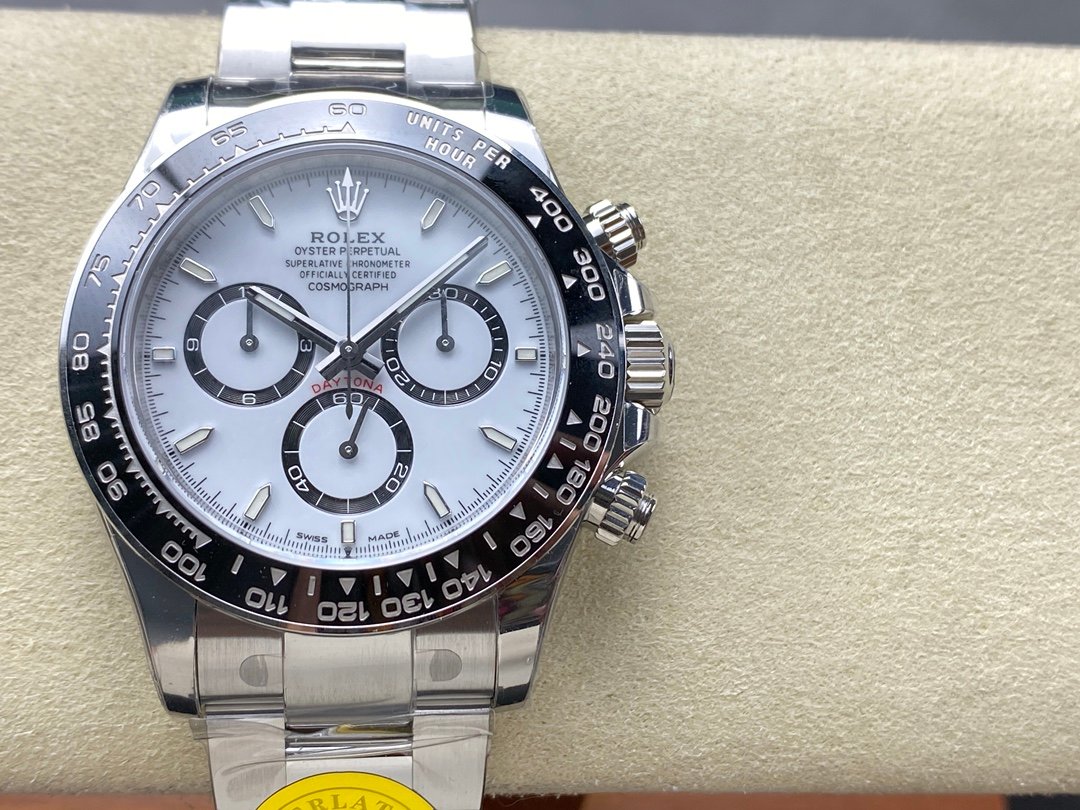
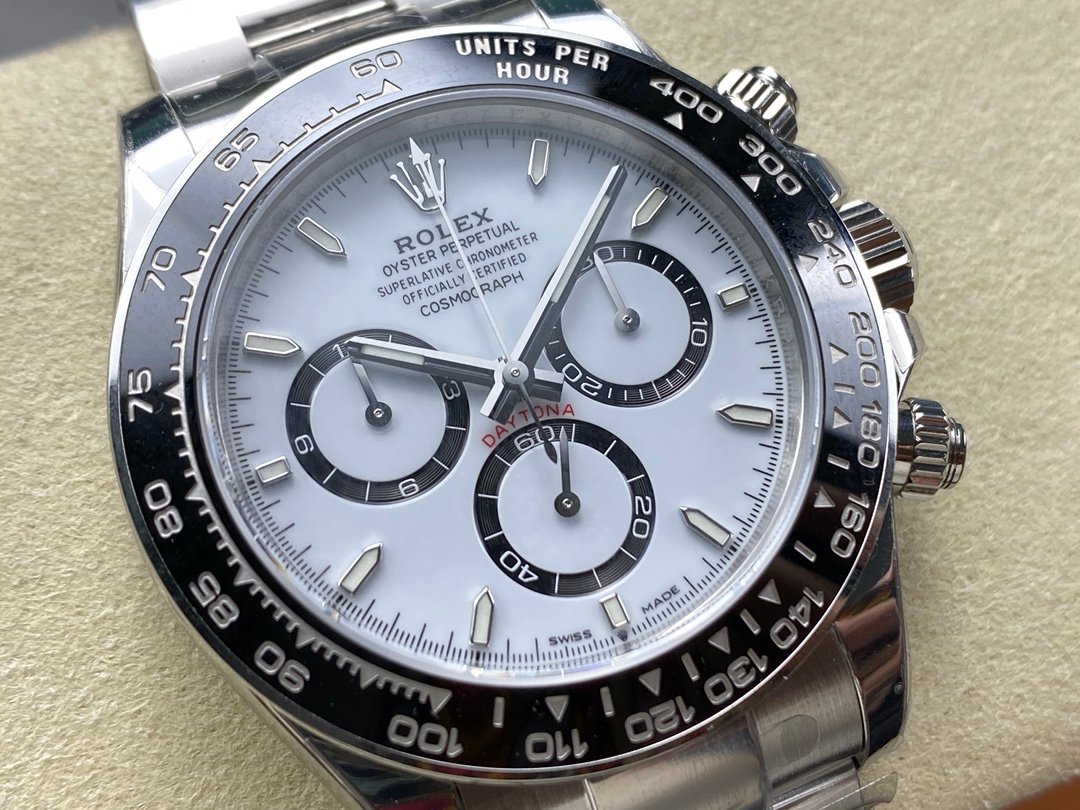
The white-dial Daytona is defined by the contrast between its light dial, dark subdial rings and black bezel. The small dials are positioned at three, six and nine o’clock, leaving the upper portion of the dial for the coronet and lettering. Applied baton markers introduce reflective edges around the face, while the red Daytona lettering supplies a small colour accent above the lower subdial.
There is no date window. That keeps the right side of the dial visually balanced with the left and avoids interrupting the chronograph layout. In the close-up image, the minute track sits outside the hour markers, separating everyday time reading from the smaller scales inside the subdials. The result is a detailed dial with a clear hierarchy rather than several equally prominent displays.
Three subdials and their different scales
The three smaller dials do not use the same scale. In the pictured configuration, the dial at three o’clock carries a 30-unit scale, the dial at nine carries a 12-unit scale, and the lower dial carries a 60-unit scale. These correspond to the familiar Daytona arrangement of elapsed minutes, elapsed hours and running seconds. The long central chronograph hand is distinct from the hour and minute hands used to read the time.
This distinction explains why counting small dials is less useful than understanding their markings. A running-seconds display describes continuous timekeeping; a chronograph counter accumulates an interval. The markings explain the intended display layout, while the installed movement determines the operation. When comparing configurations, movement identity and demonstrated start, stop and reset behaviour belong together.
Cosmograph Daytona dial and bezel close-up
How to read the tachymeter bezel
The black bezel is marked “Units per hour”. Its tachymeter scale expresses a rate calculated from elapsed seconds over one known unit of distance or work. The relationship is 3,600 divided by elapsed seconds: a one-kilometre interval lasting 30 seconds corresponds to 120 kilometres per hour; 45 seconds corresponds to 80 kilometres per hour; 60 seconds corresponds to 60 kilometres per hour.
A tachymeter therefore has unevenly spaced values. It is different from the evenly progressing minute scale of a dive-watch bezel. The scale can express miles per hour just as well as kilometres per hour, provided the measured distance is one mile. Reading a scale is separate from establishing the accuracy of the underlying timing mechanism.
The 40 mm profile and chronograph controls
The 126500 model diameter is 40 mm. A round case measurement does not include the full visual outline created by the crown and two chronograph pushers on the right-hand side. Those three controls make the silhouette more complex than a time-only watch with a single crown. In the photographs, the pushers sit above and below the crown, forming a vertical group along the case flank.
For wrist fit, diameter should be considered together with lug-to-lug length, case thickness and the shape of the first bracelet links. These dimensions answer different questions: how much wrist width the case occupies, how high it sits and how the bracelet curves away. The model designation is a useful starting point, but it is not a complete wrist-fit measurement.
Three-link bracelet and surface contrast
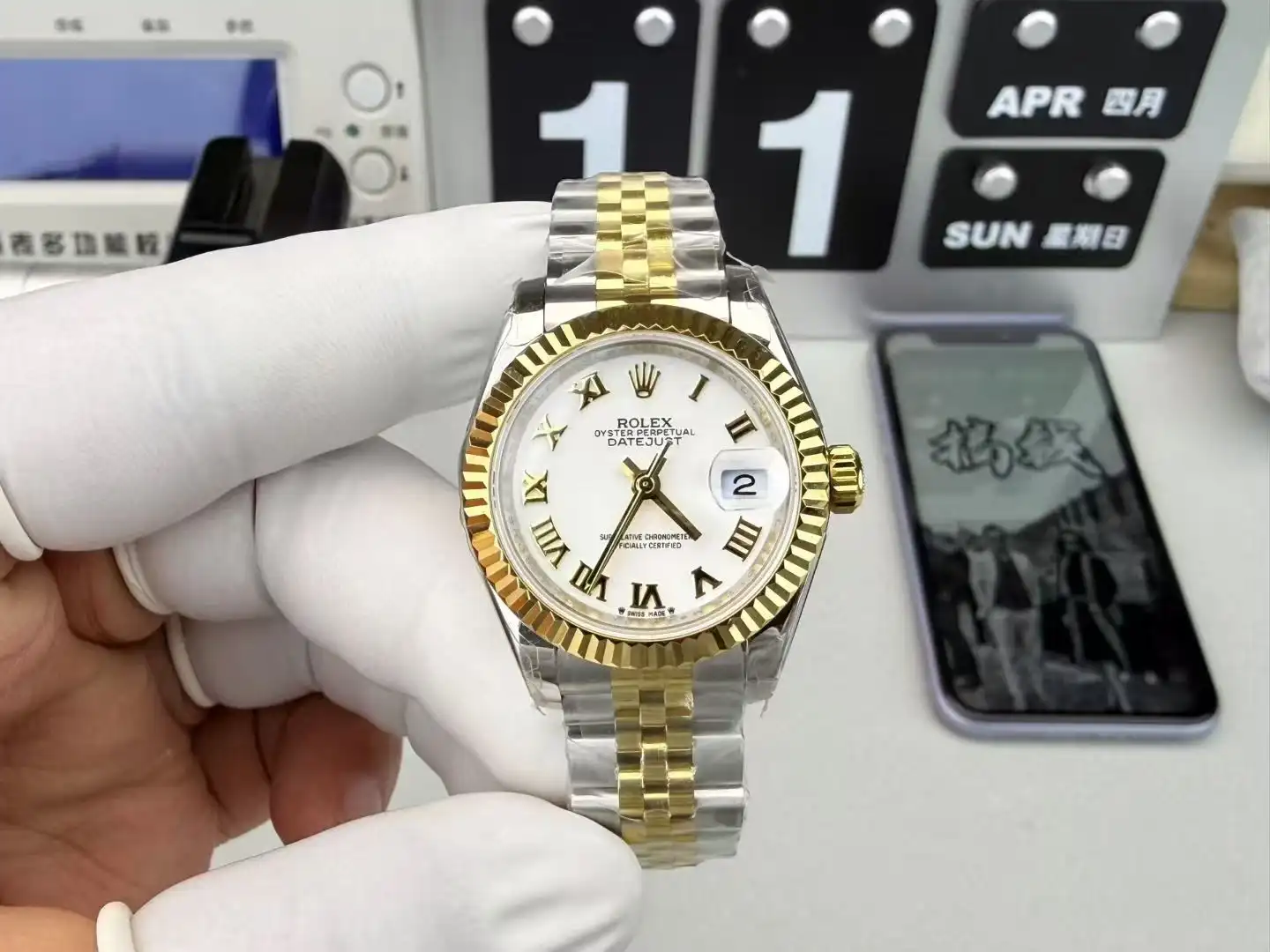
The pictured Oyster-style bracelet uses three links across its width. Its broad centre section gives it a simpler visual rhythm than the Datejust’s more finely divided five-link bracelet. Together with the dark bezel and white dial, the silver-tone bracelet keeps the colour scheme restrained even though the watch has a relatively busy display.
The case, bezel edge and bracelet reflect light differently as the viewing angle changes. A straight-on image is best for comparing proportions and dial alignment; an oblique image reveals transitions between surfaces and the way the case meets the end links. Bracelet length and adjustment range also affect how the watch balances, so sizing should be considered alongside the case rather than treated as a separate cosmetic choice.
Choosing this configuration within the collection
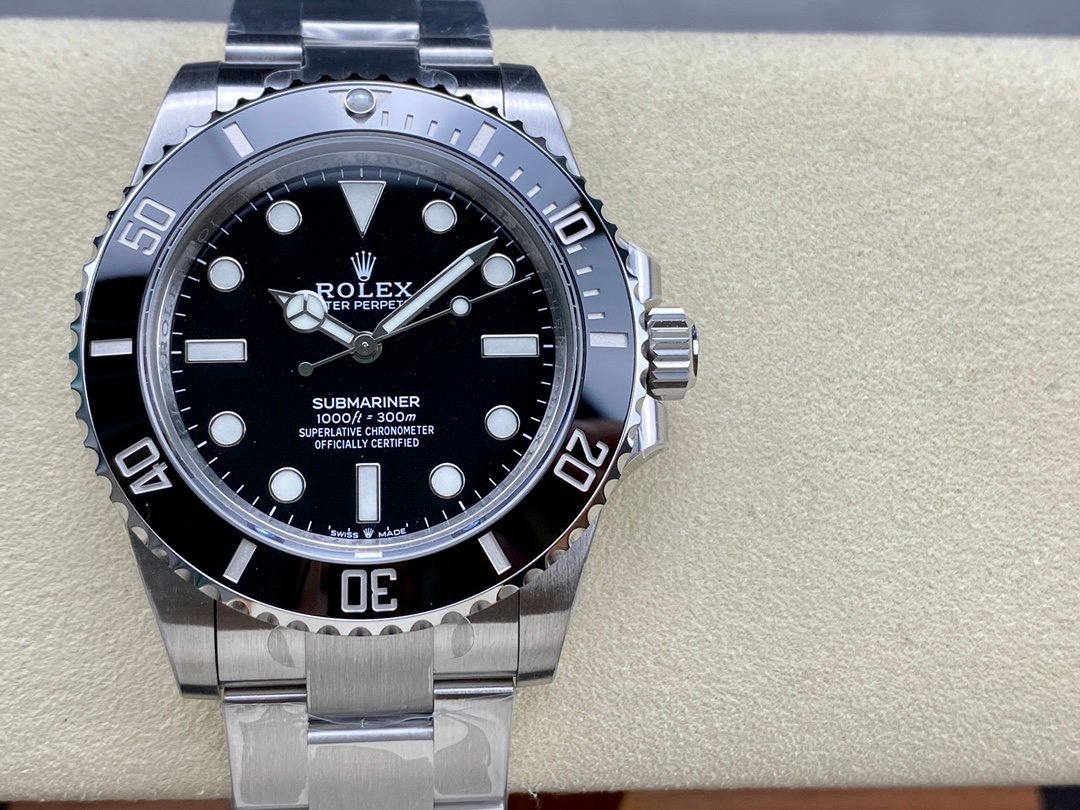
Choose this design for the visual language of a racing chronograph: contrasting subdials, an outer rate scale and the distinctive crown-and-pusher profile. Compared with the black no-date Submariner, the Daytona presents more information on the dial. Compared with the two-tone Datejust, it has a more monochrome appearance and omits the calendar display.
The white Panda dial is the central choice here. It emphasises the subdial rings and creates a strong boundary against the black bezel. Use the gallery to compare the whole watch with its dial close-up, then include reference 126500LN-0001 when discussing a configuration. Your destination country and bracelet-sizing needs help make the inquiry specific to the watch you want.
Specification
Specifications and configuration
Model details and design
Detail
Description
Model reference
126500LN-0001
Model size
40 mm
Dial
White with dark subdial rings
Subdial layout
3, 6 and 9 o’clock
Date display
No date
Bezel design
Black tachymeter scale
Bracelet design
Three-link, silver-tone
Hour markers
Applied baton markers
Subdial markings
30-unit scale at 3; 60-unit scale at 6; 12-unit scale at 9
Outer dial scale
Minute track
Bezel inscription
Units per hour
Control layout
Crown between two chronograph pushers
Colour accents
White, black and silver-tone; red Daytona lettering
Questions
Frequently asked about this reference
Why is this dial called Panda?
The nickname describes the contrast of a light dial with dark subdial surrounds. On this configuration, the dark rings stand out against the white background and are repeated visually by the black bezel.
Are all three small dials stopwatches?
No. The Daytona layout separates running seconds from elapsed-minute and elapsed-hour displays. The photographed scales identify the intended layout; the fitted movement determines how the individual displays operate.
Is the tachymeter limited to kilometres?
No. It can express kilometres per hour, miles per hour or another rate per hour. The calculation uses the time required for one known unit; for example, one mile in 30 seconds corresponds to 120 miles per hour.
Does the 40 mm measurement include the pushers?
Case diameter normally refers to the case body rather than the full span across the crown and pushers. The controls therefore contribute to the silhouette without being represented by that single number.
How is this different from the Submariner?
The Daytona has three subdials, chronograph pushers and a tachymeter scale. The Submariner no-date design has a simpler time display and a bezel graduated in minutes. Their dial organisation and timing concepts are different.
What should I include in an inquiry?
Include 126500LN-0001, your destination country, preferred bracelet fit and any movement requirements. The WhatsApp button includes the model and page address so the conversation starts with the correct configuration.
Inquiry message
The message below is pre-written with the model, the reference and this page. The button opens a WhatsApp draft for you to review before sending.
Current availability and the price for one watch.
Which movement is fitted, and whether the calibre marking is visible in a photograph.
Water resistance as supplied, and whether it has been pressure tested.
Measured weight in grams and the lug-to-lug measurement.
Photographs of the dial and bezel straight on, in daylight, plus a short video of the chronograph running.
Shipping cost and lead time to my country, and any warranty that applies, in writing.