Replica collection · Ladies’ Nautilus · Ladies' date
Patek Philippe Ladies' Nautilus 7118/1200R-010, rose gold with a golden brown dial, 35.2 mm
Model reference: 7118/1200R-010
Price by inquiryconfirmed in the chat, with shipping and lead time
Model size35.2 mm, measured across the ten and the four
DialGolden brown opaline with the wave pattern
Dial printLettering under the 12 within the embossing; not legible in the frames
Hour-marker layoutApplied 12 at the top; baton markers at the other hours
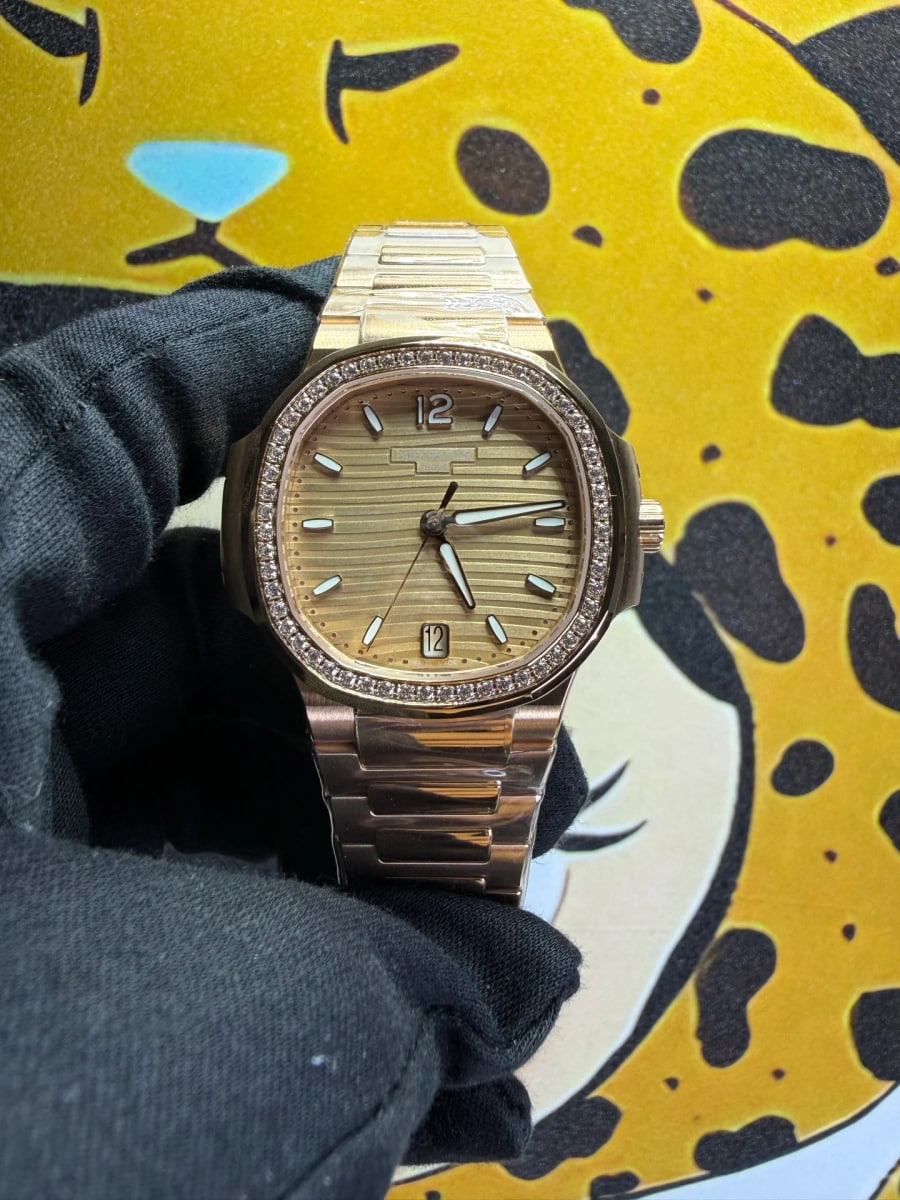
A 35.2 mm rose-gold Ladies’ Nautilus with a golden brown opaline wave-pattern dial, a bezel set with small stones all round and a gold-tone link bracelet.
Opens a WhatsApp chat with the model, the reference and this page already written into the message.
Nothing is sent until you press send. Prefer to write it yourself? Use the inquiry box further down.
About this watch
Design and details
This is the Ladies’ Nautilus, reference 7118/1200R-010: a 35.2 mm case measured across the ten and the four, 8.62 mm high, with the bezel set with small stones all the way round and no plain polished flat left between them. The dial is golden brown opaline carrying the collection’s wave pattern, so the surface breaks into soft lines rather than the squared pattern used higher up the Nautilus range.
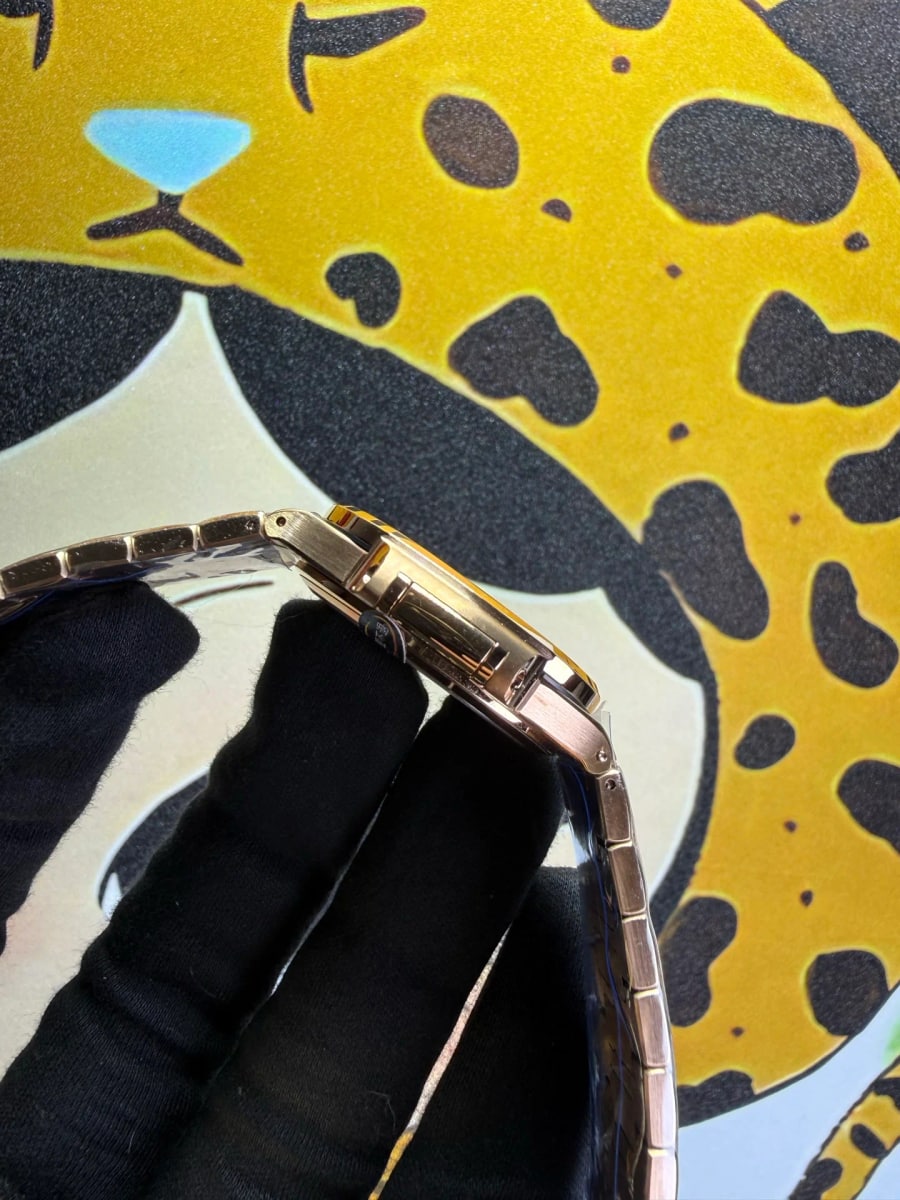
The four frames in the gallery answer four different questions. The straight-on frame settles the dial colour, the markers and the date together; the angled frame shows how the wave pattern moves as the light changes; the case-back frame shows the movement through the sapphire; the clasp frame shows how the links fold and how wide the bracelet looks against the small case. What the frames cannot settle — the movement fitted to the offered watch, what its case, bezel and bracelet are actually made from, the bracelet supplied and its water-resistance state — is raised in the conversation rather than stated here.
How does the stone-set bezel change the look of this 35.2 mm case?
On the Ladies’ Nautilus the bezel carries most of the visual weight. This reference is specified with 56 brilliant-cut diamonds set right around it and no plain polished flat left between them, so the ring reads as one continuous band above a case that is only 35.2 mm across.
That band changes the whole balance of the watch, and the dial has to hold its own against it: the golden brown opaline surface is embossed and the markers stand proud of it, so both still read past the bright ring. Whether the stones on the watch being offered are diamonds, and how tightly they are held in their settings, is something to establish on the actual piece rather than from a photograph.
What can be read on the golden brown dial in the front frame?
The front frame is the one to take the colour from. The dial is golden brown with an opaline finish, and the wave pattern crosses it in soft horizontal lines that catch the light unevenly, so the tone runs paler towards the top of the dial and deeper brown around the edges.
Everything else on the dial is fixed by the reference: an applied 12 at the top, applied markers with luminescent fill at the other hours, alpha-style hour and minute hands, a thin centre seconds hand, and a small rectangular date aperture low in the dial at the six. Lettering sits under the 12, worked into the embossing, and is not legible in the frames supplied.
Bracelet and clasp detail of the Ladies’ Nautilus, the gold-tone links and closed fold-over clasp lying over a gloved hand beside the case
Which hours carry numerals instead of markers on this dial?
Only the twelve is written as a numeral. Every other hour is marked with a baton, so the dial has a single figure at the top of the wave pattern and shutters of luminescent fill running round it. The 12 is applied rather than printed, standing slightly above the dial surface, which is why it holds its shape in the angled frame as the light slides off the embossing.
The markers carry the same luminescent coating as the hands, so the dial still reads quickly despite the small case. The metal of the numerals and markers matches the case tone in the photographs. What those parts on an individual watch are actually made from, and how long the coating stays bright, is not something a still image can answer.
What does the bracelet and its clasp look like in the frames?
The bracelet is integrated: it leaves the case as one piece and steps down through rectangular links, wider where it meets the case and narrowing towards the clasp. In the clasp frame the links are folded over a gloved hand, which is the clearest way to judge how wide the bracelet is against a case this size.
The reference design uses a patented fold-over clasp with a lockable adjustment, so the length can be set without taking links out. How many links are fitted to the watch being offered, whether spare links come with it, and how much adjustment the clasp on that watch actually gives, all have to be answered for the piece itself.
Which movement is behind the sapphire case back on this reference?
The case-back frame shows a movement through a clear back: bridges, screw heads and the weight of the winding mechanism are visible, and the back sits inside the case rim with the bracelet passing behind it. The sapphire back is part of the reference design, and the case measures 8.62 mm high.
Patek Philippe’s own data for the 7118/1200R-010 specifies a self-winding calibre 26-330 S C with the date in an aperture, sweep seconds and a power reserve of 35 to 45 hours. Whether the movement inside the watch being offered is that calibre, and what the parts seen through this particular back are made from, are questions for the supplier rather than conclusions from a photograph.
How does this reference compare with the larger Nautilus models?
The difference is not only in size. The larger Nautilus cases are shown with a squared pattern on the dial, while this one is opaline and embossed with waves. The case is also measured across the ten and the four instead of straight across, so the 35.2 mm figure does not sit directly against the diameters quoted for the bigger cases.
The bezel settles the other half of the comparison. Here the stones are set all the way round with no polished flat left between them, so the ring, not the case, is what the eye meets first. Choosing between the two sizes is a question of how much of the bezel you want to read and how much case you want on the wrist, not of one being a reduced copy of the other.
Specification
Specifications and configuration
Model details and design
Detail
Description
Model reference
7118/1200R-010
Model size
35.2 mm, measured across the ten and the four
Dial
Golden brown opaline with the wave pattern
Dial print
Lettering under the 12 within the embossing; not legible in the frames
Hour-marker layout
Applied 12 at the top; baton markers at the other hours
Hand arrangement
Alpha-style hour and minute hands with luminescent fill; thin centre seconds
Date display
Small rectangular aperture low in the dial at the six
Bezel design
Stone-set all the way round; 56 brilliant-cut diamonds, 0.71 ct, per the reference data
Colour combination
Golden brown dial, gold-tone case and bracelet, small set stones in the bezel
Bracelet shown
Integrated link bracelet, gold tone in the frames
Clasp
Patented fold-over clasp with a lockable adjustment, per the reference design
Case back
Sapphire crystal, per the reference design
Movement (reference design)
Self-winding calibre 26-330 S C; date aperture and sweep seconds; 35 to 45 hours
Case height (reference design)
8.62 mm
Water resistance (reference design)
30 m
Questions
Frequently asked about this reference
How does this differ from the nearest larger Nautilus reference?
The larger Nautilus cases are shown with a squared pattern on the dial and are quoted by a straightforward diameter, while this one has an opaline dial with the wave pattern and a case measured across the ten and the four at 35.2 mm. The bezel is the other difference: here it is set with stones all the way round. Ask for lug-to-lug, height and weight on the actual piece before comparing fit.
How does a 35.2 mm case wear?
The figure is taken across the ten and the four rather than straight across, so it is not the same as the diameter quoted for a round case of similar width. The 8.62 mm height, the lug-to-lug length and the way the first bracelet links drop away from the case decide whether this covers the wrist or sits lightly on top of it. Give your wrist measurement when you ask.
What does a stone-set bezel mean for servicing and inspection?
Each stone is held by the metal immediately around it, not by the case as a whole, so the bezel has to be checked stone by stone for looseness and for setting wear, and it cannot be polished the way a plain metal bezel can. Cleaning around the settings also needs more care. Ask for the bezel photographed close up and at a low angle on the actual watch.
What can the four frames not prove about this watch?
The frames show the dial straight on, the case at an angle, the movement through the case back and the bracelet with its clasp closed. They cannot show which movement is fitted, what the case, bezel and bracelet are actually made from, whether the stones are diamonds, which bracelet or extra links would be supplied, or the water-resistance state of the piece. Those answers come from the supplier.
What should I confirm before paying?
Have the supplier answer for the piece being offered: the movement fitted, the material of the case, bezel, bracelet and stones, the number of links and how the clasp adjusts, and the water-resistance state. Then ask for a short video — seconds hand sweeping, date turning, the bezel checked stone by stone at a low angle, and the clasp opened and closed.
Is the pattern on this dial the same as on the larger Nautilus references?
No. This dial is golden brown opaline carrying the collection’s wave pattern, embossed as soft horizontal lines across the surface, where the larger references are shown with a squared pattern. The embossing catches light unevenly, which is why the dial reads paler at the top and darker towards the edges; check on the offered watch that the lines are evenly raised and unmarked.
Inquiry message
The message below is pre-written with the model, the reference and this page. The button opens a WhatsApp draft for you to review before sending.
Current price for one watch, the shipping cost to my country, the countries you ship to and the lead time.
Which movement is fitted to the offered watch, and whether the case, bezel and bracelet are solid gold or a wrapped base.
Whether the stones in the bezel are diamonds, how they are held in the setting, and what the setting metal is.
Which bracelet is supplied, how many links are fitted and removable, and what adjustment the fold-over clasp offers.
The water-resistance state of the piece as supplied, any pressure-test evidence, and measured case height, lug-to-lug and weight.