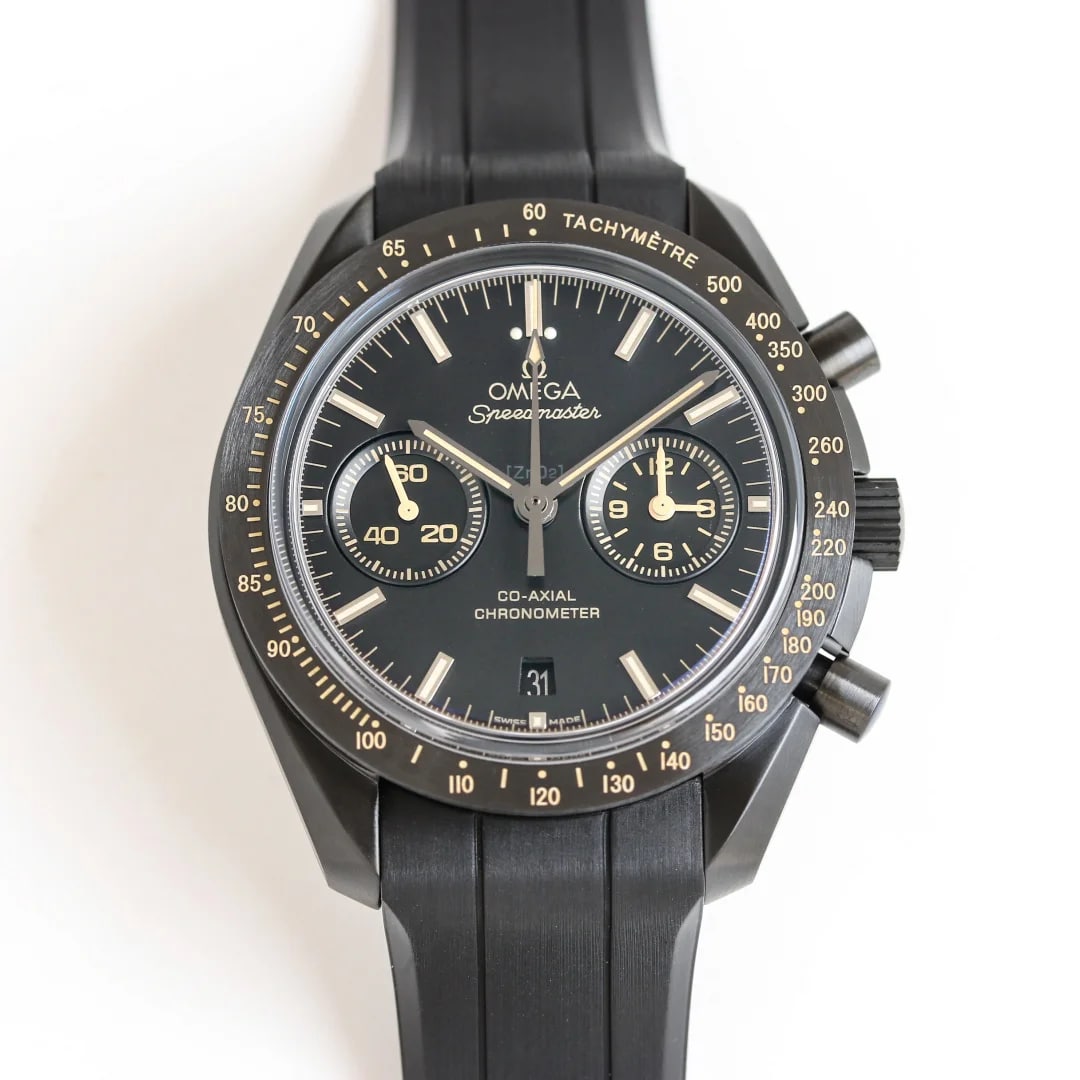
Omega Speedmaster Dark Side of the Moon ref. 311.92.44.51.01.007, black ceramic, 44.25 mm
Model reference: 311.92.44.51.01.007
Price by inquiryconfirmed in the chat, with shipping and lead time
Model size44.25 mm
DialBlack, polished ceramic
Dial printOMEGA and Speedmaster above the centre; Co-Axial Chronometer below
Hour-marker layoutApplied baton markers, doubled at twelve
Reference 311.92.44.51.01.007: the Speedmaster Dark Side of the Moon, a 44.25 mm black ceramic chronograph with two counters, a date above six and a black strap.
Opens a WhatsApp chat with the model, the reference and this page already written into the message.
Nothing is sent until you press send. Prefer to write it yourself? Use the inquiry box further down.
About this watch
Design and details
The Speedmaster Dark Side of the Moon is the black-ceramic Speedmaster, and this page covers reference 311.92.44.51.01.007. Omega’s own data for the reference gives a 44.25 mm case machined from black ceramic, 16.14 mm thick and 49.80 mm from lug to lug, 21 mm between the lugs, and a brushed ceramic bezel carrying a matt chromium-nitride tachymeter scale; the dial is polished black ceramic with blackened applied subdial rings and applied indexes in 18-carat white gold, and the reference is rated to 50 m.
The four frames below are shown as they arrived. Read together they cover the dial straight on, the case flank with the crown and both pushers, the dial and bezel seen close up, and the back of the watch. What a photograph cannot settle — which movement is fitted, the metal each part is actually made from, the strap supplied, the weight, and the water-resistance state of this particular watch — is asked for in the WhatsApp conversation, and the inquiry list at the end of the page sets it out.
What does a ceramic case mean for weight and for scratches?
On this reference the case, the bezel and the dial are all black ceramic, which is why the watch reads as one dark object rather than as a metal case with a black dial set into it. The tachymeter scale on the bezel is matt and the dial print is light on dark, so those are what carry the legibility: there is no contrast between case and dial to fall back on, and every number on the watch has to earn its place.
Weight is a separate question from material. A useful answer arrives as a figure in grams from a scale with the watch on it, not as a claim about what a material usually weighs. On scratches, the surface of the actual watch matters more than any general statement: ask for the case flank, the bezel edge and the dial photographed in daylight and again at a raking angle, because a mark on a glossy black surface is easiest to see when light skims across it.
How do the two counters and the date read on this dial?
The counter at nine o’clock is printed 20, 40 and 60 with 60 at the top, and the counter at three o’clock is printed 12, 9 and 6, so the left one is calibrated for a single hour and the right one runs on into hours. Read them the way any chronograph is read: the central seconds hand starts and stops, and the two smaller hands hold what the centre hand has already swept, so the pair together keeps the running total without the centre hand having to be watched.
The date sits in a plain aperture low in the dial, above six o’clock, with no magnifier over it, so it takes up less of the dial than a lensed date would. Whether the minutes and hours print exactly as the scales suggest on the watch being offered is worth confirming on a short timing video, which shows the counters stepping rather than frozen in a single still frame.
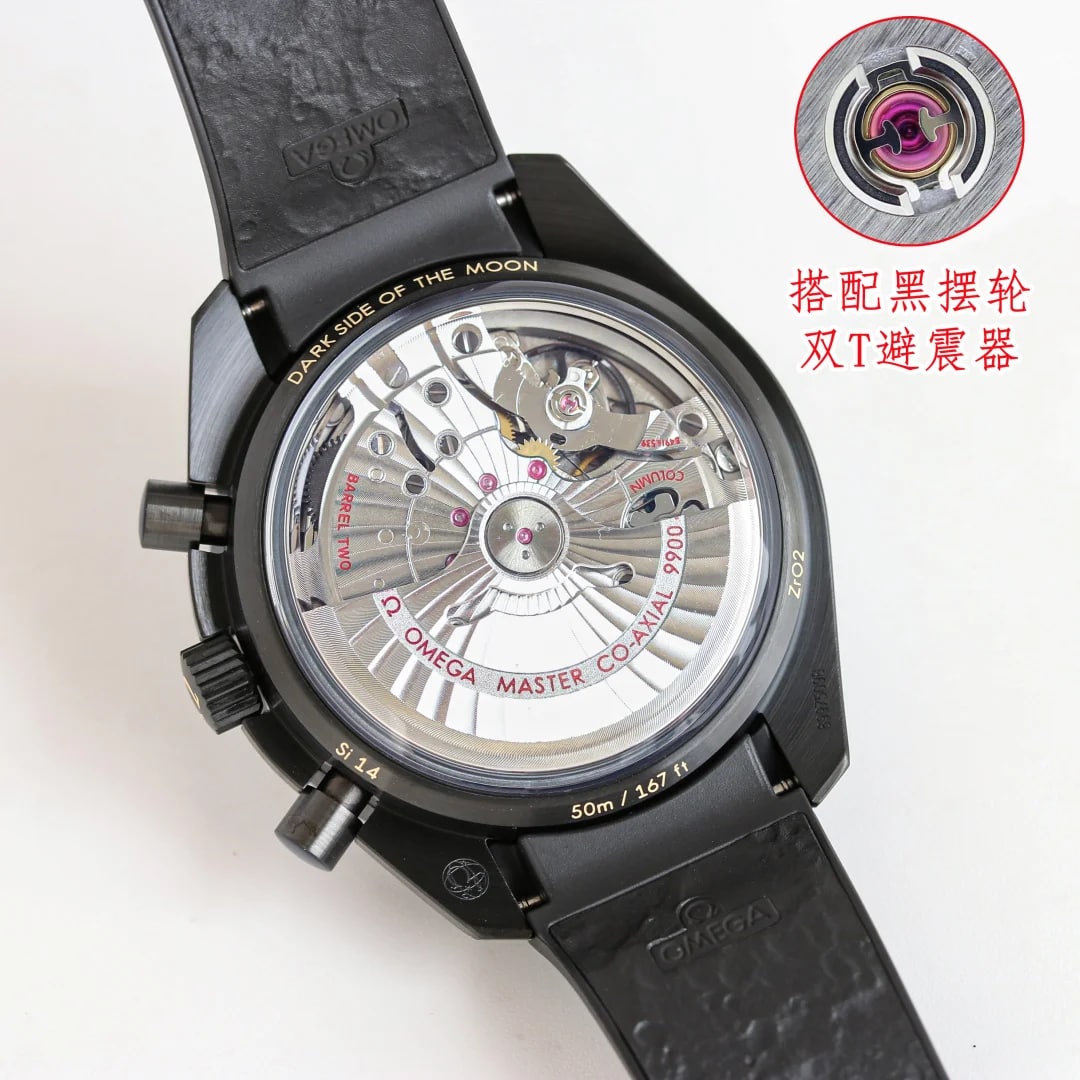
Case back detail of the black case with the strap folded behind, the rim lettered Dark Side of the Moon, and an inset panel at the upper right of the frame
How does a 44.25 mm case wear?
The reference figures are 44.25 mm across, 16.14 mm thick, 49.80 mm lug to lug and 21 mm between the lugs. All four matter and the diameter is the least informative of them on its own: lug-to-lug is what decides whether the case finishes inside the edge of the wrist, and 16 mm of thickness is enough to change how a cuff and a shirt sleeve pass over the watch.
The honest comparison is against a watch you already wear, measured in the same way. If your current chronograph is 42 mm but longer from lug to lug than this one, this watch may sit smaller on the wrist than its diameter suggests. Photographs of the offered watch on a wrist, with the wrist measured and stated, answer the fit question better than any table of numbers.
What should I look at in the photographs?
Begin with the straight-on frame, because it is the only one where the whole layout is visible at once: both counters, the date window in the lower half, the doubled marker at twelve and the print above and below the centre. Then use the close-up for the smaller checks — the shape of the counter hands, the tachymeter numerals and whether the dial print sits crisp against the black surface or softens at its edges.
The angled frame is where the case is judged: the flank, the crown between the two pushers, and how the strap leaves the lugs. The last frame turns the watch over and shows the back and the folded strap, which is where marks the front view hides are most likely to appear, so look at the rim lettering and the condition of the strap surface there.
What can the frames not prove?
A photograph shows the outside of a watch and nothing more. It cannot say which movement is fitted, what the case, bezel, dial or clasp is actually made from on the offered piece, or what the strap is made of — the shoulder of a strap above the lugs looks the same whether it is rubber, leather or a fabric laid over leather, which is precisely the open question for this reference.
Water resistance is a state rather than a specification. The reference is rated to 50 m, but what a particular watch will tolerate after its own history of use is a question about that watch, answered by test evidence and a date if any exists. Weight is the third thing no frame can show, which is why a measured figure in grams is asked for separately.
What should I confirm before paying?
Pin the offer to the reference number and to photographs of the specific watch rather than of the model in general. Ask for the dial straight on in daylight, the case back, the strap and clasp from both sides, and the case flank at a raking angle; then ask for the measurements and the weight in grams to be stated alongside those images so the numbers and the pictures refer to the same watch.
After that, settle the things a picture cannot reach: the movement fitted, the metal of each part, the strap and clasp supplied, and any test evidence for water resistance. The commercial side deserves the same clarity — the price for one watch, the shipping cost to your country, the countries shipped to and the lead time — and once all of it is in writing you can judge whether the piece matches what you understood you were buying.
Specification
Specifications and configuration
Model details and design
Detail
Description
Model reference
311.92.44.51.01.007
Model size
44.25 mm
Dial
Black, polished ceramic
Dial print
OMEGA and Speedmaster above the centre; Co-Axial Chronometer below
Hour-marker layout
Applied baton markers, doubled at twelve
Hand arrangement
White-gold hour and minute hands, rhodium-plated centre chronograph seconds hand with a red tip
Date display
Plain aperture above six o’clock
Subdial layout
Sixty-minute scale at nine o’clock printed 20, 40, 60; twelve-hour scale at three o’clock printed 12, 9, 6
Bezel design
Brushed ceramic, matt chromium-nitride tachymeter scale
Colour combination
Black case, bezel and dial with light markers and print, and one red-tipped hand
Strap shown
Black strap, smooth surface with a raised centre line in the photographs
Clasp
Ceramic and titanium foldover, on the reference strap
Case back
Transparent back with lettering around the rim
Movement (reference design)
Co-Axial calibre 9300, 60 hours of power reserve
Questions
Frequently asked about this reference
What does the ceramic case mean for the weight and for scratches?
Neither is answered by naming the material. For weight, ask for the watch to be placed on a scale and the figure given in grams; for scratches, ask for the case flank and the bezel edge in daylight and at a raking angle, since a glossy black surface hides marks in flat light and shows them when light skims across it.
How do the two counters and the date on this dial read?
The counter at nine o’clock is printed 20, 40 and 60 and the counter at three o’clock 12, 9 and 6, so the left one is calibrated for an hour and the right one for hours, while the central hand is the one you start and stop. The date is a plain window above six o’clock with no magnifier.
Is 44.25 mm too large for a 17 cm wrist?
The diameter by itself does not settle it. With 49.80 mm from lug to lug and 16.14 mm of thickness on the reference design, whether it works on a given wrist comes down to how flat the wrist is and how the strap crosses the gap between the lugs. Ask for the watch on a wrist next to the measured wrist figure.
What should I check in the photographs on this page?
The straight-on frame for the whole dial layout, the close-up for the counter hands and the tachymeter numerals, the angled frame for the case flank, crown and pushers, and the back frame for the rim lettering and the strap surface. Look at the dial print and the counter print in particular.
What can the pictures not tell me about the watch being offered?
Which movement is fitted, what the case, bezel, dial and clasp are actually made from, what the strap is made of, the weight, and whether this particular watch still holds its rated 50 m of water resistance. Every one of those has to come back as an answer or as evidence rather than as an assumption.
What should I confirm before I pay?
That the reference number, the photographs, the measurements and the weight all describe the same watch; that the fitted movement, the strap and clasp supplied and the metal of each part are stated; and that the price for one watch, the shipping cost, the destinations and the lead time are agreed in writing before any payment is sent.
Inquiry message
The message below is pre-written with the model, the reference and this page. The button opens a WhatsApp draft for you to review before sending.
Which movement is fitted in the piece you are offering, and what the back and its markings show.
What the case, bezel, dial and clasp of the offered watch are actually made from, and which strap is supplied with it.
Current price for one watch, the shipping cost to my country, the countries you ship to and the lead time.
A measured weight in grams, plus the thickness and the lug-to-lug length as measured on the actual watch.
Whether any water-resistance test has been carried out and when, and photographs of the dial straight on in daylight, the case flank and the strap from both sides.