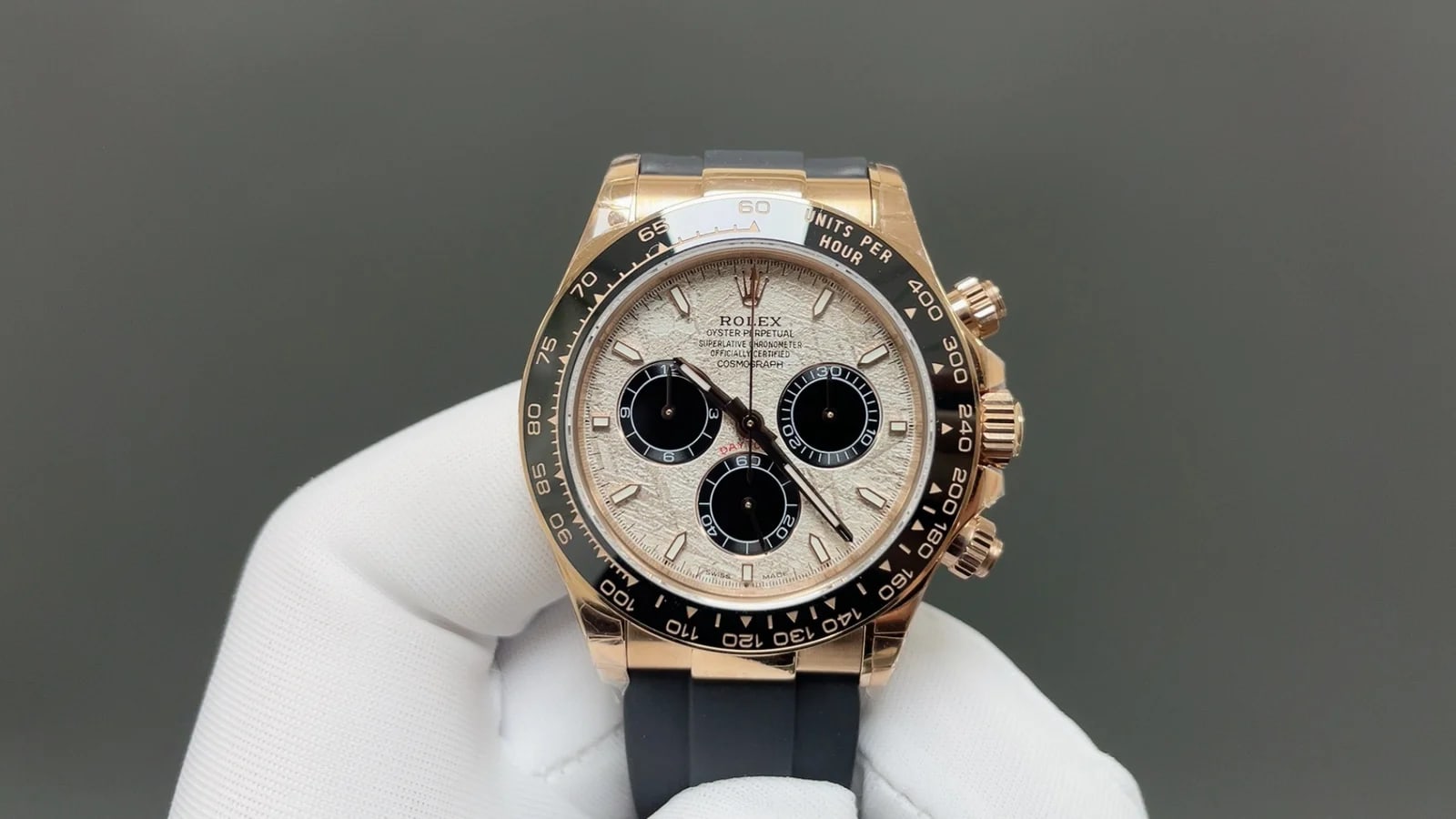
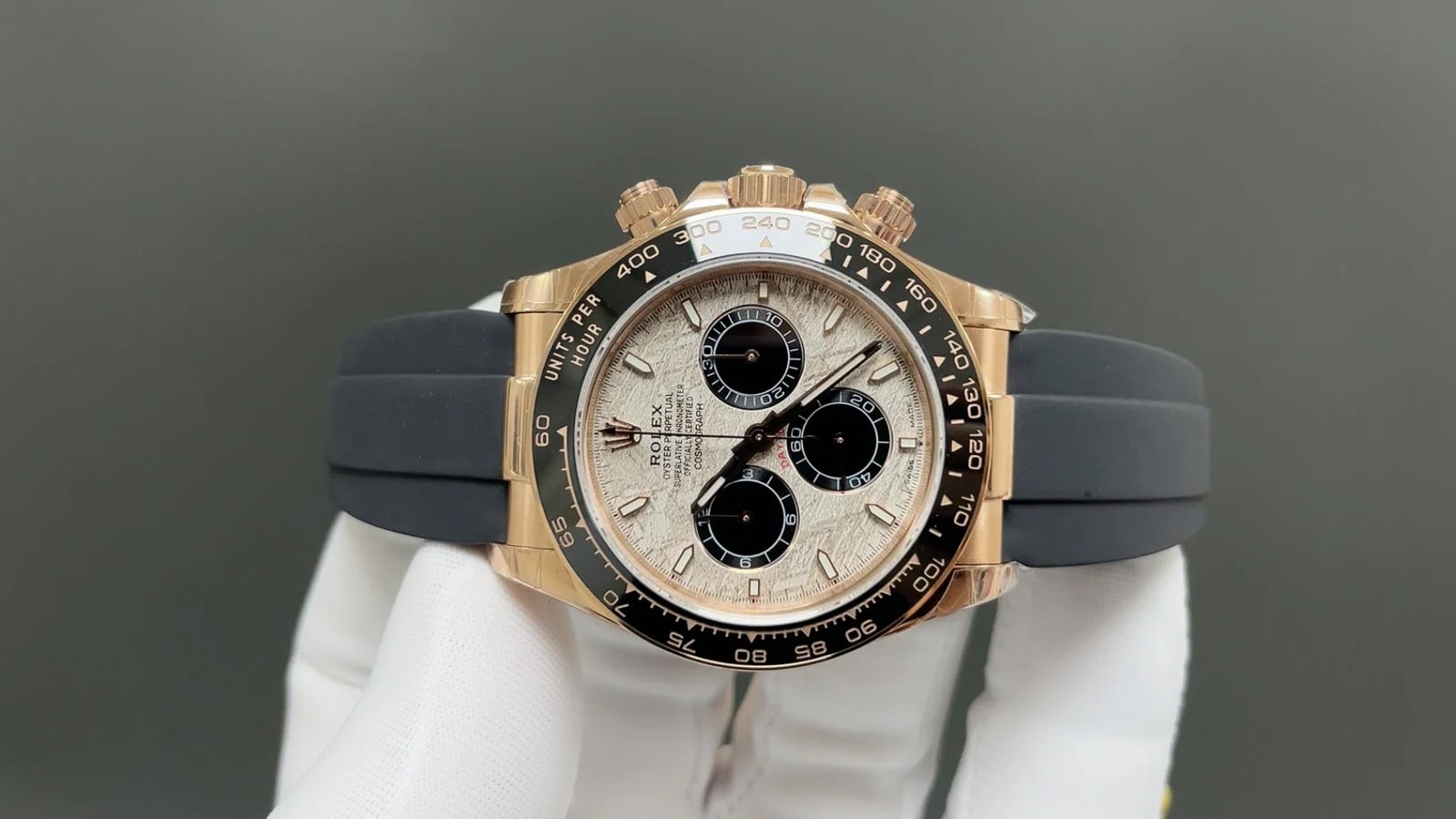
Rolex Cosmograph Daytona, Everose gold with a meteorite dial, 40 mm
Model reference: 126515LN-0008
Price by inquiryconfirmed in the chat, with shipping and lead time
Model size40 mm
DialMeteorite and black, with counters set into the surface
Subdial layoutCounters at 3, 6 and 9 o’clock, plus a central chronograph hand
Date displayNo date
A 40 mm Everose-gold Cosmograph Daytona with a meteorite-and-black dial, a black Cerachrom-style tachymeter bezel and a black rubber strap over metal blades.
Opens a WhatsApp chat with the model, the reference and this page already written into the message.
Nothing is sent until you press send. Prefer to write it yourself? Use the inquiry box further down.
About this watch
Design and details
This is the Everose gold reading of the meteorite Daytona. The case, pushers and crown photograph a distinctly warm pink-gold, and the dial mixes the meteorite surface with black areas so the two counters and the running-seconds display sit on dark instead of light.
The gallery follows the same order as the other Daytona page here, but the frames answer different questions: the black bezel’s rate table is legible in the straight-on views, the case-flank frame shows the crown between the pushers in profile, and the case-back frame shows the solid back and the clasp folded under the strap.
How does the meteorite and black dial differ from the silver meteorite one?
The dial here is described as meteorite and black, and the frames show what that means in practice: the textured material is paired with dark areas rather than sitting under dark counter rings alone. The contrast therefore moves from the ring around each counter to the space between them.
This is the sort of difference that is invisible in a specification table and obvious in two photographs side by side. Compare the two dial close-ups in this collection before deciding: one reads light with dark rings, the other reads darker overall with the metal case supplying most of the warmth.
What does Everose gold change about the look of the watch?
Everose is a pink-gold alloy, and in these frames the case, crown and pushers all read warm — noticeably different from the cool silver-tone of the white-gold Daytona alongside it. Set against the black bezel and black strap, the warmth becomes the main colour event of the watch.
The photographs show colour and finish, not composition. If you need to know what the case of the offered piece is actually made from, ask that question directly and ask for the answer in writing, including whether any plating or wrap sits over the base metal.
Bezel and dial front view showing the printed tachymeter values around the black insert and the counters set into the meteorite surface
What does the tachymeter scale on the bezel actually show?
The bezel is a fixed scale marked “Units per hour”, with values that crowd together at the low end and spread apart at the high end. In the straight-on frames the printed range from 400 down through 300, 240, 200 and 160 to 60 is visible around the ring.
It works by division: 3,600 seconds divided by the elapsed seconds gives units per hour, so 60 seconds correspond to 60 and 30 seconds to 120. A tachymeter is therefore not a stopwatch scale and not a dive scale; it produces a rate from a measured interval.
How are the counters laid out on this dial?
Three counters sit at three, six and nine o’clock with the central chronograph hand above them. On a dark dial the counters remain readable because their rings and hands carry the lighter tones, and the markers are applied so their edges catch the light as the watch turns.
The layout question that matters in use is which counter accumulates minutes and which accumulates hours, because both are read only after the chronograph has been started. Ask for a video of the sequence rather than judging the movement from a static photograph.
What should I know about the strap and clasp?
The strap is black on the outside with polished metal at the clasp, and it is built over metal blades rather than being a plain rubber band, which is why it keeps a curved shape when it is off the wrist. Cushions on the inside sit between the strap and the skin.
Length is adjusted through the clasp, so the useful information is which sections are fitted and how much adjustment is left. The clasp in the case-back frame is shown closed and folded under the strap, which is the view to compare against photographs of the watch you would actually receive.
Which of the two meteorite Daytonas should I choose?
Both are 40 mm chronographs with three counters, a black tachymeter bezel and a black strap. The decision is about colour and dial treatment: warm gold with a darker dial here, cool silver-tone with a lighter dial on the other page in this collection.
If you are choosing between them, look at the two straight-on frames together rather than reading specifications, and then decide which contrast you want on the wrist. Bring the reference 126515LN-0008 into the conversation so the answer stays attached to the configuration you have chosen.
Specification
Specifications and configuration
Model details and design
Detail
Description
Model reference
126515LN-0008
Model size
40 mm
Dial
Meteorite and black, with counters set into the surface
Subdial layout
Counters at 3, 6 and 9 o’clock, plus a central chronograph hand
Date display
No date
Bezel design
Fixed black bezel with a tachymeter scale
Bezel graduations
“Units per hour” with printed values from 400 down to 60 in the gallery frames
Control layout
Crown between two pushers on the right-hand side
Strap design
Black strap over curved metal blades, with cushions on the inside
Clasp
Folding safety clasp with a length-adjustment extension
Colour combination
Warm pink-gold case and pushers, black bezel, black strap, meteorite dial
Questions
Frequently asked about this reference
Is the bezel on this Daytona ceramic or metal?
It photographs as a gloss black insert carrying the printed tachymeter scale, with a metal edge where it meets the case. What the insert is actually made from on the offered watch is a supply question — ask for it together with a straight-on photograph of the bezel.
Does the meteorite pattern continue under the counters?
The counters are set into the dial, so their rings interrupt the surface. What is visible around and between them is the textured material, and that pattern varies from one dial to the next.
Can I read the tachymeter without a stopwatch function?
No. The scale is only a conversion table; it needs an elapsed time measured by the chronograph hand. Without a running chronograph, the bezel is decoration rather than an instrument.
How do I judge the size on my wrist from photographs?
Case diameter alone will not tell you. Ask for the lug-to-lug measurement, the case thickness and the strap length as fitted, and compare those against a watch you already wear.
What is the difference between this and the white-gold meteorite Daytona?
The colour of the case and the dial treatment. This reference is the warm-gold reading with a darker dial; the white-gold one is a cool silver-tone with dark-ringed counters on the lighter surface. The bezel, controls and strap concept are the same.
What should I ask for before deciding?
A straight-on dial photograph in daylight, a bezel photograph taken square to the scale, a video of the chronograph running and resetting, the strap length as fitted, and the measured weight and case thickness of the individual watch.
Inquiry message
The message below is pre-written with the model, the reference and this page. The button opens a WhatsApp draft for you to review before sending.
Which version is available to you, and which movement is fitted to the chronograph functions.
What the case, bezel insert and bracelet parts of the offered watch are made from, with any plating or wrap thickness stated.
Current price for one watch, the shipping cost to my country, the countries you ship to and the lead time.
Strap length as fitted to my wrist measurement, and how much adjustment remains in the clasp.
Photographs of the actual watch: dial straight on in daylight, bezel photographed square to the scale, case flank with the pushers, and the case back.
Measured weight, case thickness and lug-to-lug length, plus a short video of the chronograph running and resetting.